Best Symbaloo Alternatives in 2026
Symbaloo has been the default class homepage in a lot of schools for over a decade, and as a launchpad it works: a grid of tiles, one click each, embeddable anywhere. The trade-off is that a tile is only a click target. Nothing behind it is read, archived or searchable. Linkflare is the Symbaloo alternative for people who want to keep the links and actually use them. Here is how the two compare and the best Symbaloo alternatives in 2026.
What is Symbaloo?
https://www.symbaloo.com/Symbaloo is a visual start page that turns bookmarks into a grid of tiles grouped into shareable webmixes.
Symbaloo replaces the browser new tab with a colourful grid. Each bookmark becomes a tile, tiles are grouped into webmixes, and a webmix can be shared, embedded on a school website or published to a Webspace with its own address. There is a bookmark importer that accepts a browser HTML export, a public library of webmixes built by other users, a Bookmarker extension for adding tiles as you browse, apps for iOS and Android, and Learning Paths for turning the same resources into step-by-step lessons. What it is not is a place to read or search what you saved: a tile is a click target with an icon and a label, so there is no article view, no offline copy, no full-text search of page contents and no metadata for books, recipes or films. Pricing runs from the free ad-supported tier through Personal Premium at $34.95/year and Classroom at $69/year up to Library and School plans, and the paid tiers are metered by monthly Webspace pageviews rather than by how much you save.
Why look for Symbaloo alternatives?
Two things push people off Symbaloo. Its free tier is ad-supported, which is awkward in a classroom, and the paid tiers are metered by monthly Webspace pageviews rather than by what you save. A popular class page can outgrow its plan without you adding a single tile. The other is depth: a tile carries an icon and a label, so there is no reader, no offline copy, no full-text search of the pages behind it and no metadata for books, films or recipes.
Linkflare vs Symbaloo
| Feature | Linkflare | Symbaloo |
|---|---|---|
| Platforms | Web, Mac app, desktop PWA, iOS, Android, and extensions for Chrome, Edge, Firefox & Safari | Web, iOS & Android apps, plus Bookmarker and Homepage & Search browser extensions |
| Content types | Articles, videos (with transcripts), PDFs, books, movies, recipes, products, places & games | Link tiles grouped into webmixes; embedded videos, docs & feeds |
| Reading mode | Distraction-free reader with themes, fonts & offline access | No reader view: a tile opens the original site |
| Organization | Hierarchical tags, collections, saved smart filters & full-text search | Webmixes of tiles on a grid, tile groups & a public webmix library |
| Beyond bookmarking | Trip planning with maps, meal planning, movie-night voting, shared wishlists, knowledge cards & spaced-repetition review | Start-page / new-tab replacement, embeddable webmixes, Webspaces & Learning Paths |
| Pricing | Generous free tier; Pro under $5/month | Free tier is ad-supported. Personal Premium $34.95/year; Classroom $69/year; Library $699/year. Paid tiers metered by Webspace pageviews |
| Data export | One-click export of your whole library: every link as CSV, knowledge cards as JSON | Imports browser bookmarks from HTML; no data export documented |
Best Symbaloo Alternatives
- 1

Linkflare is the universal bookmark manager that goes beyond saving links. It helps you consume, plan, and act on your saved content with smart metadata for books, movies, recipes, and more. Features include trip planning with map views, meal planning, movie night voting, shared wishlists, distraction-free reading, and hierarchical tags. Available on every platform with browser extensions, mobile apps, and a PWA for desktop.
Try Linkflare Free - 2
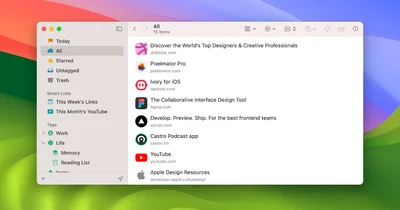
Anybox is a native Apple bookmark manager for Mac, iPhone, and iPad with powerful organization through nested tags, smart lists, iCloud sync, and Quick Find overlay. Users can archive bookmarks as PDFs or web archives and automate workflows via Siri Shortcuts, AppleScript, and integrations with Raycast and Alfred. Privacy is guaranteed as all data syncs via iCloud with no personal data collection.
Visit Anybox - 3
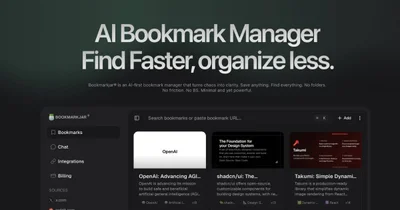
Bookmarkjar is an AI-first bookmark manager that drops folders in favor of automatic summaries, auto-tagging and semantic search. Every link you save gets a short AI summary and tags, and you find it again by asking in plain language. It also pulls in saves from X, Reddit and GitHub, and runs an MCP server so assistants like Claude and ChatGPT can query your library directly.
Visit Bookmarkjar - 4

Diigo is a research-focused bookmarking platform that combines link saving with web annotation, sticky notes, and collaborative group sharing for over 9 million users. It lets you highlight text directly on any web page or PDF and leave persistent sticky notes visible on future visits. Its Outliner feature structures research into organized knowledge bases, making it popular in academic and professional settings.
Visit Diigo - 5
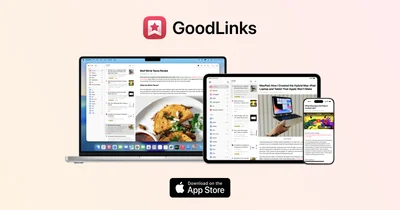
GoodLinks is a premium native Apple read-later and bookmarking app for Mac, iPhone, and iPad with a beautiful distraction-free reader, color-coded highlighting, and iCloud sync. Purchased once from the App Store, it provides lifetime access with a year of feature upgrades included. GoodLinks is completely private, with no user tracking or data sharing of any kind.
Visit GoodLinks - 6

Instapaper is one of the original read-later apps, allowing users to save any web content with one click for distraction-free offline reading on any device. It strips away ads and clutter from saved articles, delivering a clean reading experience with adjustable fonts and sizes. Highlights and comments let users capture key passages for future reference.
Visit Instapaper - 7

Karakeep is an AI-powered bookmark manager built for data hoarders, with automatic tagging, RSS feed auto-ingestion, self-hosting via Docker, and collaborative shared lists. It supports saving links, notes, images, and PDFs, all with full-text search for instant retrieval. With over 22,000 GitHub stars, it has become a beloved open-source tool in the personal knowledge management community.
Visit Karakeep - 8
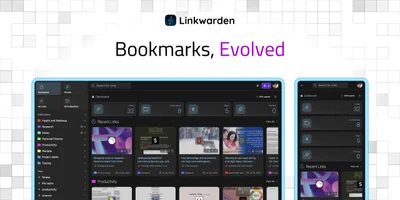
Linkwarden is an open-source bookmark manager built around full-page preservation, saving every link as complete HTML, screenshots, and PDFs to prevent link rot permanently. A dedicated reader view supports text highlighting and annotations for distraction-free content consumption. AI-powered automatic tagging, RSS feed subscription, and collection sharing make it a powerful all-around bookmarking platform.
Visit Linkwarden - 9
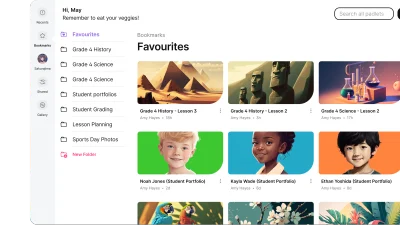
Padlet is a collaborative board where a class or a team posts links, files, images, video and audio onto one shared wall. Boards can be laid out as a wall, grid, columns, table, timeline, stream, map or freeform canvas, and anyone with the link can contribute without creating an account. It is used by over 40 million people, overwhelmingly in classrooms, and its free plan caps you at three boards.
Visit Padlet - 10
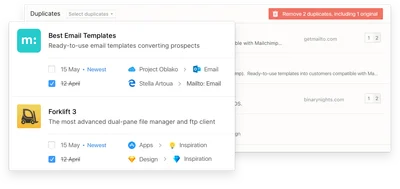
Raindrop.io is a polished all-in-one bookmark manager designed for creatives and coders alike, featuring collections, tags, full-text search across saved pages, and permanent page preservation. It offers highlights, instant in-app content previews, and cross-platform access on web, desktop, and mobile. With a generous free tier and a clean open-source ethos, it has become one of the most popular bookmark managers available.
Visit Raindrop.io - 11

Readwise helps readers retain and revisit ebook and article highlights using spaced repetition, syncing highlights from Kindle, Instapaper, iBooks, and more into one place. Daily email digests resurface your best highlights at the right intervals, helping build lasting knowledge over time. Deep integrations with Notion, Evernote, Obsidian, and Roam Research make it a central hub for any knowledge management workflow.
Visit Readwise - 12
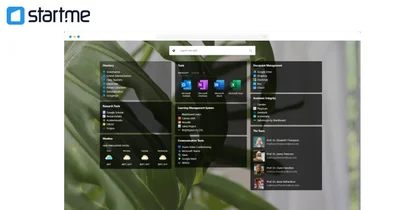
Start.me is a customizable browser start page that centralizes bookmarks, live RSS feeds, and over 50 widgets in one personalized productivity dashboard. Used by over 350,000 people and teams, it replaces the browser's new tab with an organized hub for all daily web tools. Teams can collaborate in real time on shared pages, and the platform is popular in OSINT, education, and cybersecurity research communities.
Visit Start.me
Ready to try the best Symbaloo alternative?
Linkflare goes beyond bookmarking. Plan trips, share wishlists, organize recipes, and never lose a link again. Get started for free today.
Frequently Asked Questions
Is Linkflare a good Symbaloo alternative?
Is there a Symbaloo alternative without ads?
Can I import my Symbaloo webmixes into Linkflare?
Can Linkflare replace my class start page?
More on bookmark management
Bookmark Manager: The Complete Guide to Organizing Your Links
Open tabs pile up faster than anyone reads them. A bookmark manager saves those links, sorts them and finds them again months later. Here is how to set one up.
Free Bookmarks HTML Viewer
Open, inspect, deduplicate and convert a browser bookmarks export without uploading it.
Best Bookmark Managers in 2026
We tested more than 20 bookmark managers and picked the ones worth using in 2026, with notes on who each one suits best.
AI Bookmark Manager: What AI Actually Does in 2026
Nearly every bookmark manager claims to be AI-powered. Here is what AI genuinely does today: metadata extraction, classification, summaries, tagging, dedup and semantic search. What is hype, and how to test a claim in fifteen minutes.